

The United States has reinforced its immigration screening process with a strong emphasis on financial self-sufficiency. Under the updated approach, immigrants must demonstrate that they will not become a financial burden on American taxpayers or rely on public welfare programs.
As part of this policy, applicants from certain countries are classified as high-risk, and visa issuance for these countries has been paused indefinitely. The decision is linked to concerns over visa fraud, overstays, misuse of public benefits, and other immigration-related violations.
Background and Reported Reasons for the Ban
According to data from the U.S. State Department, immigrants from parts of Central Asia and the Caucasus—including Kazakhstan, Uzbekistan, Kyrgyzstan, and Georgia—have been linked to a growing number of immigration violations. These include visa fraud, overstays, misuse of public assistance programs, human smuggling schemes, labor trafficking, and the submission of forged or fraudulent documents.
Several high-profile incidents have further strengthened the case for stricter controls. These include the killing of two National Guard members by an Afghan national and a major fraud scandal in Minnesota involving the misuse of taxpayer-funded benefit programs by Somali nationals or Somali-Americans. Such incidents reportedly influenced former President Donald Trump’s decision to impose the ban and advocate for long-term restrictions on immigration from certain developing countries.
Countries Classified as High-Risk (Visa Issuance Paused)
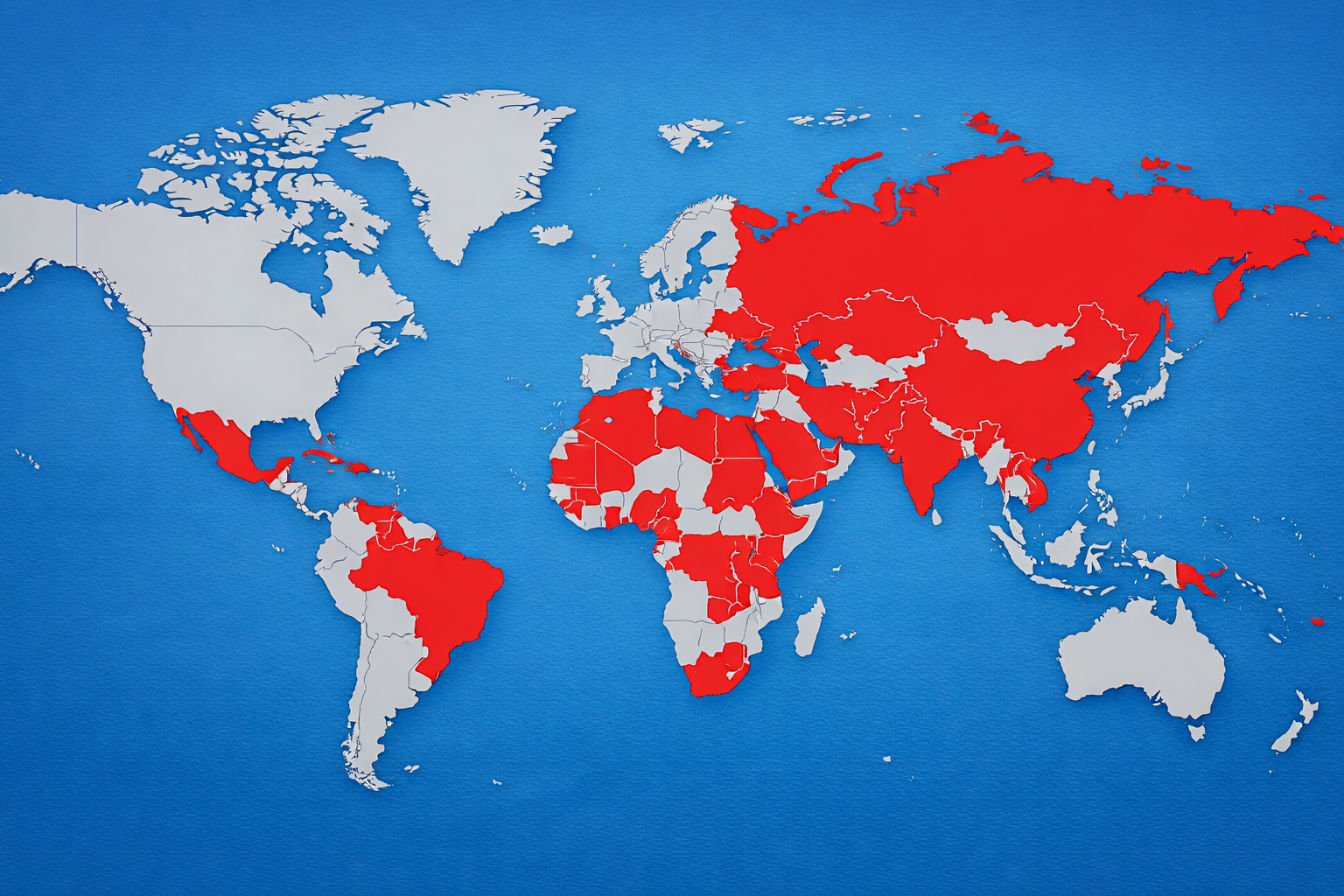
| Afghanistan, Albania, Algeria, Antigua and Barbuda, Armenia, Azerbaijan, Bahamas, Bangladesh, Barbados, Belarus, Belize, Bhutan, Bosnia and Herzegovina, Brazil, Burma (Myanmar), Cambodia, Cameroon, Cape Verde, Colombia, Côte d’Ivoire, Cuba, Democratic Republic of the Congo, Dominica, Egypt, Eritrea, Ethiopia, Fiji, The Gambia, Georgia, Ghana, Grenada, Guatemala, Guinea, Haiti, Iran, Iraq, Jamaica, Jordan, Kazakhstan, Kosovo, Kuwait, Kyrgyz Republic, Laos, Lebanon, Liberia, Libya, Moldova, Mongolia, Montenegro, Morocco, Nepal, Nicaragua, Nigeria, North Macedonia, Pakistan, Republic of the Congo, Russia, Rwanda, Saint Kitts and Nevis, Saint Lucia, Saint Vincent and the Grenadines, Senegal, Sierra Leone, Somalia, South Sudan, Sudan, Syria, Tanzania, Thailand, Togo, Tunisia, Uganda, Uruguay, Uzbekistan, and Yemen |
Countries Not Considered High-Risk (Visas Issued as Usual)
Andorra, Angola, Argentina, Australia, Austria, Bahrain, Belgium, Benin, Bolivia, Botswana, Brunei, Bulgaria, Burkina Faso, Burundi, Canada, Central African Republic, Chad, Chile, China, Comoros, Costa Rica, Croatia, Cyprus, Czech Republic, Denmark, Djibouti, Dominican Republic, Ecuador, El Salvador, Equatorial Guinea, Estonia, Eswatini, Finland, France, Gabon, Germany, Greece, Guyana, Honduras, Hungary, Iceland, India, Indonesia, Ireland, Israel, Italy, Japan, Kenya, Kiribati, North Korea, South Korea, Latvia, Liechtenstein, Lithuania, Luxembourg, Madagascar, Malawi, Malaysia, Maldives, Mali, Malta, Marshall Islands, Mauritania, Mauritius, Mexico, Micronesia, Monaco, Mozambique, Namibia, Nauru, Netherlands, New Zealand, Norway, Palau, Panama, Papua New Guinea, Paraguay, Peru, Philippines, Poland, Portugal, Qatar, Romania, Samoa, San Marino, São Tomé and Príncipe, Saudi Arabia, Serbia, Seychelles, Singapore, Slovakia, Slovenia, Solomon Islands, South Africa, Spain, Sri Lanka, Suriname, Sweden, Switzerland, Tajikistan, Timor-Leste, Tonga, Trinidad and Tobago, Turkey, Turkmenistan, Tuvalu, Ukraine, United Arab Emirates, United Kingdom, United States, Vanuatu, Vatican City, Venezuela, Vietnam, Zambia, and Zimbabwe
Visa Categories Currently SuspendedThe visa categories as mentioned below will remain suspended from 21st January 2026, This suspension is intended to allow immigration authorities to reassess applications more thoroughly, with particular focus on financial self-sufficiency, employment prospects, and the likelihood of long-term reliance on public resources. During this period, new approvals under the affected categories are on hold, while previously submitted cases may be subject to enhanced scrutiny before any further action is taken.
|
Visa Categories That Remain Open
Despite the suspension of certain immigrant visa categories, the United States continues to issue several non-immigrant and special-purpose visas without interruption. Applicants under these categories are still processed through standard procedures, although they remain subject to routine background checks, eligibility requirements, and admissibility reviews.
- H-1B
- L-1
- O-1
- B-1
- B-2
- F-1
- M-1
- Diversity Visa
- and other non-listed categories.
How Cases Will Be Reassessed
Immigration cases will now be re-evaluated using stricter criteria, with a strong focus on financial stability, health, employability, and long-term risk.
-
Financial Assessment
Authorities will review:
- Bank statements, including balance history, consistency, and source of funds
- Sudden or unexplained deposits, which are treated as red flags
- Income versus expenses
- Stability and continuity of earnings
- Affidavits of Support, where applicable
- Property ownership, investments, and savings
- Outstanding debts or loans
Note: Applicants with stable income, savings, and accessible assets are considered stronger candidates, while those with heavy debt or weak financial history face a higher risk of refusal.
-
Age Considerations
- Very young applicants are assessed for employability and future job prospects.
- Older applicants are evaluated for healthcare needs and potential retirement-related dependency.
Note: Age alone will not determine the approval or refusal of any immigration case.
-
English Proficiency
English language ability is assessed during interviews and through educational history, including the medium of instruction used at universities. The goal is to determine the applicant’s ability to integrate and avoid dependency.
-
Medical and Health Evaluation
- Mandatory medical examinations are conducted by panel physicians
- Chronic illnesses requiring long-term or institutional care may result in refusal
- Applicants must demonstrate the ability to pay for medical treatment and insurance
For example, a diabetic applicant with strong financial resources is considered low risk, while one without savings or insurance is viewed as high risk.
-
Employment Prospects
- Work history, education, and job market demand are key evaluation factors
- EB-1 and EB-2 professionals are generally viewed as strong candidates
- Applicants with prior job offers have a higher chance of approval
- High-demand fields such as healthcare, academia, and STEM are favored
Legal Framework Used for Evaluation
Cases are assessed under established government manuals and legal frameworks, including:
- Foreign Affairs Manual (FAM 302.8)
- USCIS Policy Manual (Volume 8)
- Internal State Department cables and memoranda
Relevant case law interpretations
History and Expected Time of Lifting of the Ban
Historical Precedents and Similar Restrictions
Similar travel and visa restrictions were imposed between 2017-2020 under the Trump administration. Countries affected included Iran, Iraq, Libya, Somalia, Sudan, Syria, Yemen, North Korea, and Venezuela. Partial visa pauses and heightened screening were also applied to Eritrea, Kyrgyzstan, Myanmar, Nigeria, Tanzania, and Sudan.
Between 2018–2020, a large number of immigrant visa applications from Bangladesh, Pakistan, Nepal, Haiti, Guatemala, Honduras, and El Salvador were refused due to low income levels, weak employment prospects, and a high likelihood of reliance on public assistance.
The longest comparable restriction lasted nearly four years. Based on past patterns, if reassessments move quickly, the current pause could be lifted within three to four months. However, if public-charge screening is prioritized over processing speed, the pause could extend for two to four years. Political changes or a new administration could lead to a faster reversal.
More than 200 individuals have reportedly filed lawsuits against the Trump administration challenging the nationality-based restrictions. In a federal court in Boston, plaintiffs argue that the suspension is unlawful and that immigration authorities cannot freeze adjudications for individuals already residing in the United States.
According to media reports, students, researchers, technologists, and other professionals are living in prolonged uncertainty and are urging the government to lift the pause and comply with existing immigration laws.
On other hand, Government officials have stated that pending applications are being reviewed to identify high-risk profiles, after which strict action will be taken. Only applicants deemed low risk are expected to proceed under the revised screening process.
Current Legal Developments
Several developments could force U.S. authorities to lift the current visa pause sooner than expected.
First, the growing backlog of immigration cases poses a serious challenge to the overall immigration system. Prolonged delays risk overwhelming USCIS and the State Department, making it difficult to manage existing and future applications efficiently. For this reason, the suspension cannot realistically continue for an extended period without disrupting the immigration process.
Second, immigration advocacy groups and legal organizations are likely to challenge prolonged nationality-based restrictions. Extended bans based on country of origin face strong legal scrutiny and may be contested as inconsistent with existing immigration laws and principles of equal treatment.
Third, continued delays may become a political issue, providing opposition parties with an opportunity to criticize the administration’s immigration policies. A shift in political power or leadership could significantly increase the chances of the suspension being lifted earlier than anticipated.
Conclusion
Immigration authorities will continue reassessing cases based on financial stability, health, employability, and long-term dependency risks. The duration of this pause depends on legal outcomes, political developments, and administrative priorities.




Leave a Reply